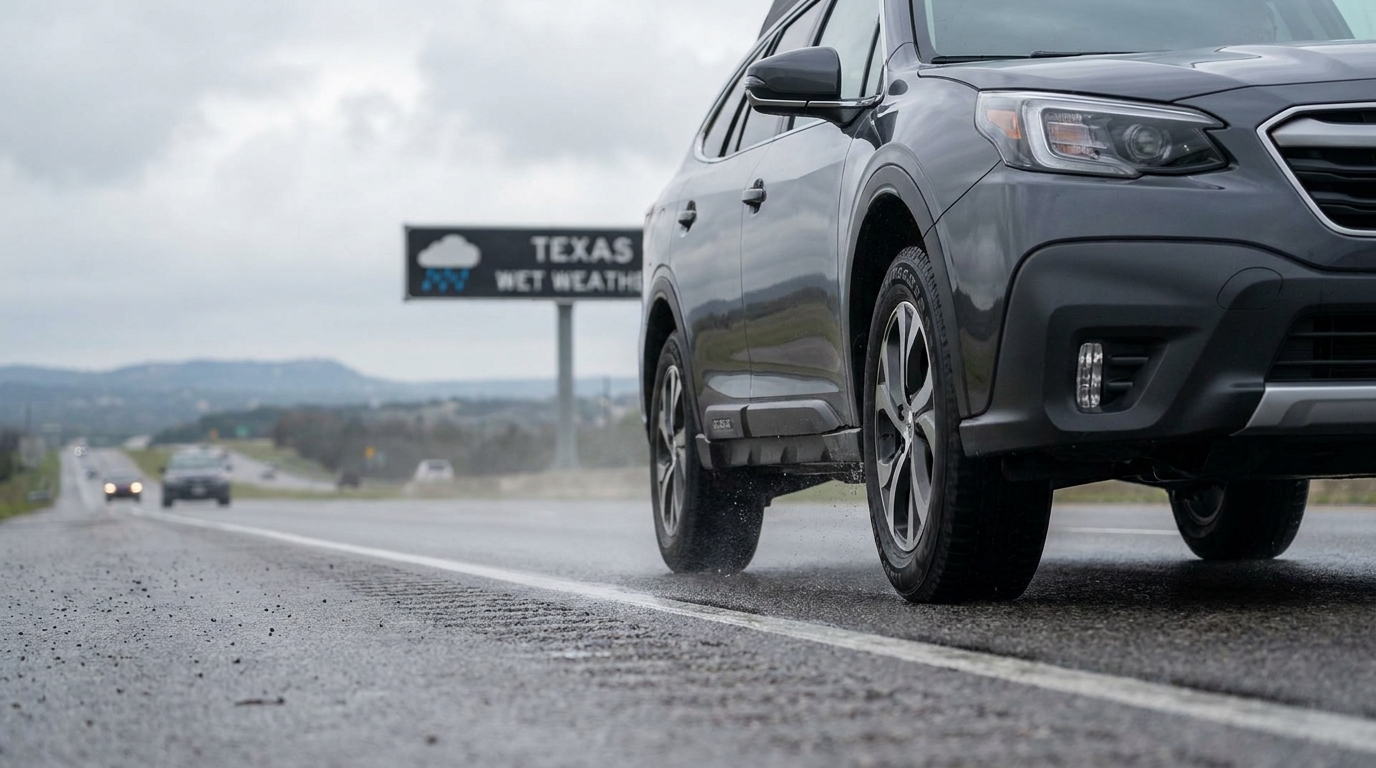

If your car shakes when driving between 60 and 80 mph, the problem may be unbalanced tires, uneven tire wear, bent wheels, tire uniformity issues, improper wheel installation, or worn suspension components.
While traditional tire balancing can correct many vibration problems, some require more advanced diagnostic equipment, such as Hunter Road Force balancing, to identify the underlying cause.
At Via Tire in Lewisville, Texas, we use professional-grade Hunter equipment to help drivers throughout Dallas–Fort Worth identify tire and wheel problems and restore a smoother driving experience.
Whether you're commuting on I-35E, traveling along Highway 121, or driving on the Dallas North Tollway, persistent vehicle vibrations should never be ignored.
7 Common Reasons Your Car Shakes at Highway Speeds
1. Unbalanced Tires
Unbalanced tires are one of the most common causes of vehicle vibration at highway speeds.
When weight is unevenly distributed around a tire and wheel assembly, it can create vibrations that become more noticeable as vehicle speed increases.
Common symptoms include:
- Steering wheel shaking at highway speeds
- Vibrations through the seat or floorboard
- Shaking that becomes noticeable between 60 and 80 mph
- Uneven tire wear
Professional wheel balancing helps correct weight distribution and improve ride quality. However, if your vehicle continues to shake after a traditional tire balance, additional diagnostics may be necessary.
2. Excessive Road Force Variation
Not every tire vibration is caused by a weight imbalance.
Even a properly balanced tire can produce vibrations if its construction creates inconsistent forces as it rolls under the weight of the vehicle.
This is known as radial force variation, commonly referred to as Road Force variation.
Traditional wheel balancing measures weight distribution, but it may not identify inconsistencies in tire stiffness or uniformity.
At Via Tire, our Hunter Road Force Elite wheel balancer uses a diagnostic roller to apply pressure against the tire, simulating the load experienced during actual driving.
This allows our technicians to identify certain tire and wheel problems that conventional balancing may overlook.

3. Bent or Damaged Wheels
Potholes, road debris, curbs, and construction zones can damage wheels.
A bent wheel can cause:
- Steering wheel vibration
- Highway-speed shaking
- Air pressure loss
- Irregular tire wear
- Difficulty achieving a smooth ride
Even minor wheel damage may contribute to noticeable vibrations. A professional tire and wheel inspection can help determine whether the wheel is contributing to the problem.
4. Uneven or Damaged Tires
Tires that develop irregular wear patterns, flat spots, internal damage, or tread separation can create significant vibrations.
Common causes of uneven tire wear include improper inflation, neglected tire rotations, wheel alignment problems, and worn suspension components.
If your tires have visible bulges, exposed cords, signs of separation, or sudden severe vibrations, stop driving as soon as it is safe and arrange professional assistance.
Replacing damaged tires may be necessary to restore safe vehicle operation.
5. Wheel Alignment Problems
Wheel alignment determines how your tires contact the road and how your vehicle tracks while driving.
Although improper alignment is not usually the primary cause of speed-specific vibration, it can contribute to uneven tire wear that eventually creates shaking and other ride quality problems.
Signs that your vehicle may need an alignment include:
- Your vehicle pulls to one side
- Your steering wheel is off-center
- Tires wear unevenly
- Your vehicle feels unstable while driving
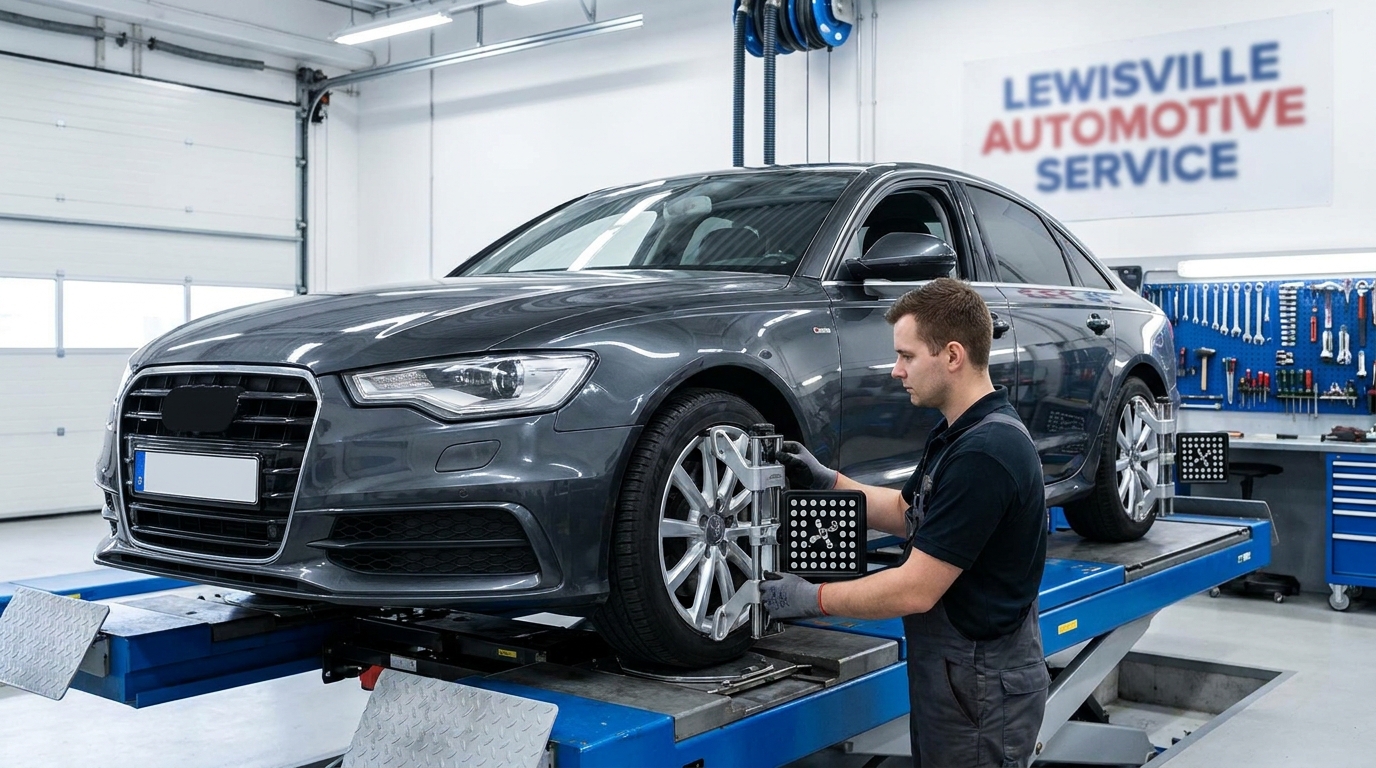
Via Tire uses Hunter alignment technology and an in-ground alignment rack at our Lewisville tire shop.
Our equipment allows us to accommodate a wide range of vehicles, including supported electric vehicles, lowered cars, sports cars, SUVs, and pickup trucks.

6. Improper Tire or Wheel Installation
If your vehicle started shaking immediately after purchasing new tires or wheels, the installation should be inspected.
Possible causes include:
- Improper wheel centering
- Incorrect wheel balancing
- Missing or incorrect hub-centric rings on aftermarket wheels
- Improper wheel torque
- Tire seating or uniformity issues
Installing tires requires more than simply mounting them onto wheels.
At Via Tire, we emphasize vehicle-specific installation procedures, proper torque specifications, professional balancing, and careful wheel handling.
Our touchless tire-changing equipment also helps minimize the risk of damage to sensitive wheel surfaces during installation.
7. Worn Steering or Suspension Components
Sometimes the source of vehicle vibration is unrelated to the tires themselves.
Worn wheel bearings, ball joints, tie rods, suspension components, or drivetrain parts can also contribute to shaking.
If tire and wheel diagnostics do not reveal the cause, further mechanical inspection may be necessary.
Identifying the actual problem before replacing unnecessary parts can help drivers avoid additional expenses.
What Is the Difference Between Road Force Balancing and Regular Tire Balancing?
Traditional tire balancing corrects uneven weight distribution within a tire and wheel assembly.
Road Force balancing goes further by measuring how the tire and wheel assembly responds to an applied load, helping identify certain vibration problems that standard balancing alone cannot detect.
Traditional balancing is suitable for many routine tire installations, while Road Force balancing is particularly useful for diagnosing persistent vibrations.
Road Force technology can also guide technicians in match-mounting a tire to its wheel to help reduce force variation.
Why Does My Car Still Shake After Getting New Tires?
New tires do not automatically guarantee a vibration-free ride.
A vehicle may continue to shake after receiving new tires because of tire uniformity issues, wheel damage, improper mounting, wheel centering problems, or suspension-related conditions.
If you recently purchased new tires and your vehicle still vibrates at highway speeds, a Road Force diagnostic inspection may help determine the cause.
At Via Tire, we use our Hunter Road Force Elite to evaluate tire and wheel assemblies and determine whether additional corrective measures are needed.
Is Road Force Balancing Worth It?
Road Force balancing is often worthwhile when conventional tire balancing has failed to resolve persistent vibrations.
It can also be beneficial for:
- Luxury vehicles
- Electric vehicles, including supported Tesla models
- Performance vehicles
- Vehicles with aftermarket wheels
- Lowered vehicles
- Vehicles with low-profile tires
- Pickup trucks and SUVs experiencing persistent vibrations
These vehicles may have tire, wheel, or suspension characteristics that make ride quality particularly sensitive to tire and wheel irregularities.
Where Can I Get Road Force Balancing in Lewisville, Texas?
Via Tire offers professional Hunter Road Force balancing at our fully equipped tire shop in Lewisville, Texas.
We welcome customers from Lewisville, Flower Mound, Highland Village, Carrollton, Coppell, The Colony, Frisco, Denton, Grapevine, and surrounding Dallas–Fort Worth communities.
Our Lewisville tire shop offers:
- Hunter Road Force balancing
- Precision wheel alignment
- Touchless tire mounting
- New tires and quality-inspected used tires
- Custom wheels
- TPMS diagnostics and replacement
- Electric vehicle tire services
- Performance and lowered vehicle tire services
- Mobile tire installation
- Commercial and fleet tire services
Frequently Asked Questions
Why does my car shake at 70 mph but not at lower speeds?
Tire imbalance, tire uniformity issues, or wheel irregularities can become more noticeable at certain speeds. Professional tire and wheel diagnostics can help identify the cause.
Why does my steering wheel shake on the highway?
Steering wheel vibration is often associated with problems involving the front tires or wheels. However, steering, suspension, and other mechanical problems may also contribute.
Can a wheel alignment fix highway vibrations?
An alignment can correct wheel angles and help prevent irregular tire wear, but it does not directly correct tire imbalance or excessive Road Force variation. The underlying cause should be identified first.
Can tires be balanced and still cause vibration?
Yes. A tire can have correct weight distribution but still produce vibrations because of variations in stiffness, wheel runout, or other tire and wheel irregularities.
How much does Road Force balancing cost in Lewisville, TX?
Pricing depends on the vehicle, wheel size, number of tires being serviced, and diagnostic requirements. Contact Via Tire for an accurate quote for your specific vehicle.
Is it safe to drive when my car is shaking?
Persistent shaking should be inspected promptly. If the vibration is sudden, severe, affects vehicle control, or is accompanied by visible tire damage, stop driving as soon as safely possible and arrange professional assistance.
Does Via Tire offer both wheel balancing and alignments?
Yes. Via Tire offers professional wheel balancing, Hunter Road Force diagnostics, and precision wheel alignments at our Lewisville, Texas, location.
Is Via Tire open on Sundays?
Yes. Via Tire is open seven days a week.
- Monday–Saturday: 8 AM–7 PM
- Sunday: 9 AM–5 PM
Stop the Shaking and Get Back to Enjoying the Drive
You shouldn't have to accept uncomfortable vibrations as part of your daily commute.
At Via Tire, we believe identifying the source of a tire or wheel problem is just as important as correcting its symptoms.
With advanced Hunter diagnostic equipment, experienced technicians, precision alignment technology, and a commitment to professional tire service, we help North Texas drivers make informed decisions about their vehicles.
Whether you drive a daily commuter, a luxury vehicle, a Tesla, a modified sports car, or a commercial vehicle, our team is ready to help.
Schedule your tire and wheel inspection today at www.viatire.com or visit our Lewisville tire shop.
Via Tire — Buy Back Your Time.